
 There seems to be an ever-growing number of platforms in market research that promise to do everything: collect data, analyse it, visualise it, dashboard it, summarise it, and share it. Increasingly, they will even generate executive summaries, often with the help of AI.
On the surface, this sounds ideal. Fewer tools. Fewer handovers. Fewer moving parts.
And sometimes, it is ideal.
But there is a deeper issue hiding behind this “do everything” ambition: market research itself is becoming less structured, not more, and software has responded unevenly.
Market research is fragmenting, not converging
Not so long ago, research followed a fairly predictable path. Questionnaires were relatively stable, analysis requirements were familiar, and outputs were fairly standard. Software could afford to be opinionated about “the right way” to do things.
That’s no longer true.
Today, research inputs vary widely: short feedback surveys, complex tracking studies, multi-country projects, and hybrid datasets that combine survey data with operational or business data. Outputs vary just as much: PowerPoint reports, dashboards, executive summaries (increasingly AI-assisted), data feeds into Power BI or other internal systems, and often several of these at once.
The uncomfortable truth is that no single platform handles all of this equally well.
Three broad types of research work
Very simplistically, most research work now falls into three overlapping categories: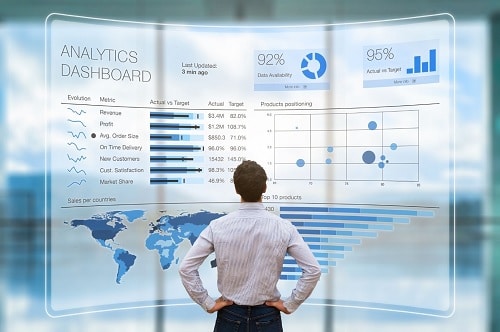
- Simple and fast
Short surveys, quick turnaround, standard outputs. Many modern platforms serve this space extremely well. - Traditional or standard research
Longer questionnaires, established analytical techniques, regular reporting cycles. This is where classic tabulation and scripting tools have historically excelled. - Specialist or complex work
Tracking studies, changing questionnaires, multi-country projects, complex variables, repeated outputs, and integration with other systems.
The problem isn’t that platforms focus on one of these. The problem is trying to serve all three with a simplified core.
When that happens, compromise is inevitable, and it almost always appears in the middle layer: analysis, data handling, and repeatability.
The temptation of “almost good enough”
Many platforms respond to growing complexity by simplifying the analysis and processing layer. That makes demonstrations easier, onboarding quicker, and sales conversations smoother. It also creates the impression that everything is under control. Until it isn’t.
Complexity doesn’t disappear; it just reappears later — as manual work, fragile workarounds, repeated re-thinking, or an inability to adapt when something changes. Tracking studies become brittle. Repeating work becomes painful. Integrating with other systems turns into a project in its own right.
“At least it nearly does what we need” is a dangerous place to settle.
Why integration is harder than it looks
Joining systems together isn’t just about file formats or APIs. It depends on whether the analysis layer itself is flexible, repeatable, and robust enough to cope with change.
If every new requirement means reprogramming from scratch or repeating a series of manual steps, the software may look integrated — but it isn’t efficient and probably prone to error.
This is one of those areas where data processing teams often feel the pain long before it becomes visible elsewhere. Time is lost in small, repetitive tasks that don’t show up clearly in plans or budgets, but quietly absorb hours and increase risk.
Where MRDCL fits in all this
MRDCL was never designed to be everything to everyone.
It doesn’t collect data. It doesn’t try to replace specialist visualisation tools. What it focuses on deliberately is the part of the process where complexity accumulates: building variables, handling messy data, repeating analysis reliably, and preparing outputs that can travel elsewhere without friction.
That position is becoming more relevant, not less.
As research becomes less structured and client expectations become more varied, the need for a strong, flexible analysis engine increases. Not to replace platforms that work well for simple cases, but to stop compromise becoming the default for complex ones.
A final thought
“All-in-one” sounds reassuring. In practice, the smartest systems tend to know what not to do, and how to work well with others.
One warning sign I’ve learned to watch for is software that makes it easy to import data but awkward to export it. That usually isn’t accidental. Trapping data inside a platform may protect a business model, but it rarely serves research teams well.
In my experience, the real test of research software isn’t how impressive it looks in a demo.
It’s how calmly it behaves when something changes.
If you find yourself working around your platform more often than with it, it may be worth reconsidering which parts of your process really need flexibility, and which tools should carry that responsibility.
Latest Posts
 Faster, Better, Cheaper. If Only.March 4, 2026 - 10:41 am
- Why Some Platforms Embed Their Analysis Engine (Instead of Building One)December 29, 2025 - 2:39 pm
- Why the Smart Platforms Don’t Try to Do EverythingOctober 3, 2025 - 11:23 am
- Why Modern Market Research Needs a Data Hub (Not Another Platform)August 2, 2025 - 12:42 pm
- From Craft to System: How Analysis Becomes ScalableJune 25, 2025 - 1:24 pm
- Why Tracking Studies Break and How to Stop Them BreakingApril 1, 2025 - 11:43 am
- Real Survey Data Is Messy. Your Software Should Expect That.February 8, 2025 - 1:59 pm
- When Scripting Is the Right Tool and When It Isn’tJanuary 8, 2025 - 11:08 am